Cataract surgery
Microincision, no-stitch outpatient cataract surgery with a custom intraocular lens. I operate near León, Mexico, 20 minutes from the airport.
Dr. Emmanuel Bolaños Betancourt: ophthalmic surgeon with advanced fellowship training in Cornea, Refractive Surgery, and Cataract Microsurgery. I see patients at Hospital Aranda de la Parra Puerto Interior (20 minutes from León) and at Oftalmo-Visión Clínica Oftalmológica in downtown Silao. Board certified by the Consejo Mexicano de Oftalmología since 2013, member 3045. Over 15 years of clinical practice, 292 combined Google reviews with a 4.9 average.
I specialize in safe, outpatient cataract surgery using advanced technology.
Cataract Surgery with Advanced Technology in León, Guanajuato
What is a cataract and how does it affect your vision?
A cataract is a progressive clouding of the lens, the eye’s natural focusing structure. As it clouds, light no longer passes through cleanly and vision turns blurry, with glare and a loss of sharpness.
Cataracts are one of the leading causes of vision loss in older adults, though they can also appear in younger people because of other medical conditions or eye injuries.
If you live in León, Silao, Irapuato, or anywhere in the Bajío region and you are considering cataract surgery, here is the clear, plain information you need to make a good decision. I am fluent in English, so the whole consultation can be in English, and I also see patients who travel from other cities in Mexico and from abroad.
“What my patients say on Google”
Read reviews
What are the symptoms of a cataract, and how do I know if I have one?
Some of the most common symptoms that could point to a cataract:
Blurry or cloudy vision, as if looking through a dirty window
Discomfort from bright lights or glare
Trouble driving at night
Frequent changes in your glasses prescription
Colors that look duller or more yellow
More difficulty reading or seeing fine detail up close
What causes cataracts to form?
The most common causes include:
- Natural aging of the eye (age-related cataract)
- Poorly controlled diabetes
- Prolonged sun exposure without eye protection
- Long-term steroid use
- Previous eye trauma or surgery
- Genetic or hereditary factors
If any of these risk factors apply to you, I recommend a complete eye exam.
How is a cataract diagnosed?
To diagnose a cataract, I do a complete ophthalmologic evaluation in my office at Hospital Aranda de la Parra Puerto Interior, where I have all the diagnostic equipment in one place. I examine the clarity of the lens with a slit lamp, check your visual acuity and the back of your eye, and look for any other conditions that could affect the surgical outcome.
Most of the time, I can give you a clear diagnosis at that first visit. Every test is done with advanced technology, without sending you anywhere else.
When do you actually need cataract surgery?
You do not need to wait until the cataract is “ripe.” The right time to operate is when it starts affecting your quality of life:
If you can no longer read clearly
If driving at night has become risky
If glasses no longer improve your vision
Or if daily activities have become difficult
In these cases, cataract surgery is the most effective and predictable treatment.
What does cataract surgery involve?
Cataract surgery is an outpatient, painless procedure with a fast recovery, which I perform personally in ISO 9001 certified operating rooms, located in the same building as my office.
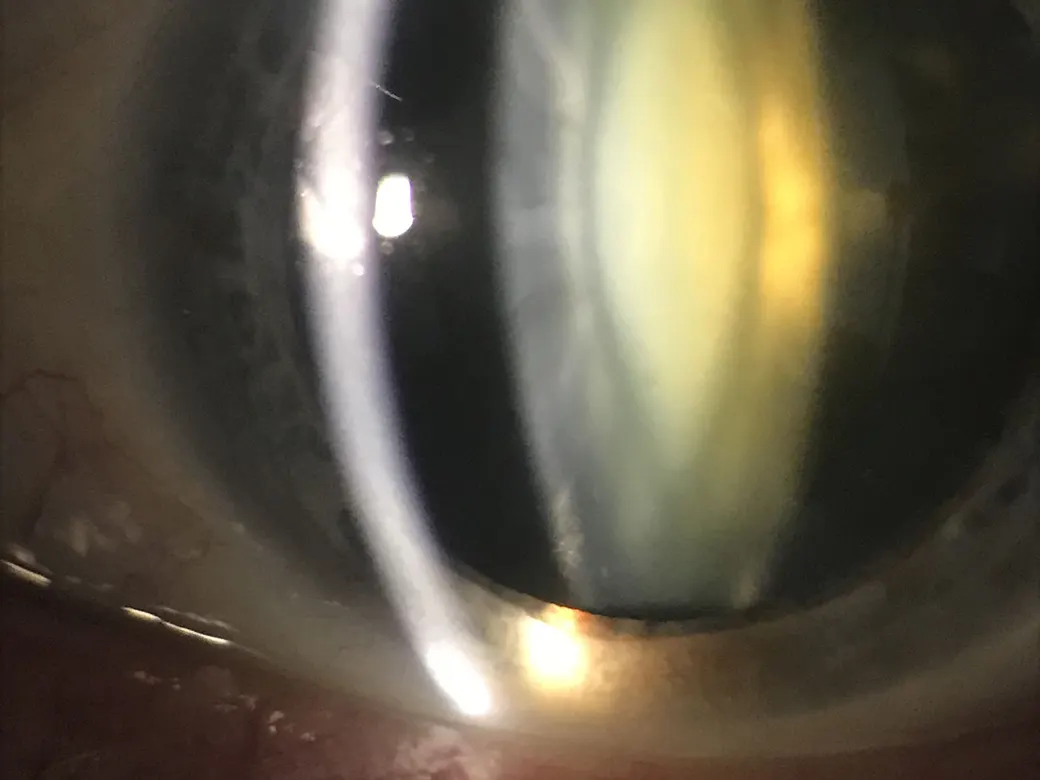
The procedure involves:
- Removing the clouded lens that is affecting your vision
- Implanting a clear intraocular lens, which replaces the natural lens and lets you focus clearly again
- Everything is done with anesthetic drops, with no hospital stay and no stitches
The procedure usually takes 20 to 30 minutes per eye. In many cases, visual improvement starts the very first day.
If you want to learn more about the types of intraocular lenses and which one might suit you, visit this page: Intraocular Lens Implants.
Where do the evaluation and follow-up happen?
I do every preoperative evaluation and postoperative follow-up myself, in my own office. I have the latest diagnostic equipment, which lets me offer complete care in one place, without referring you elsewhere.
What tests do I need before cataract surgery?
Before operating, I run detailed tests that help me plan the procedure precisely and choose the right intraocular lens for you:
- Ocular biometry
- Cornea and retina evaluation
- Intraocular pressure measurement
- Fundus exam
All of these are done in the office, in a single day.
What can I expect after cataract surgery?
Visual recovery is usually fast. Most of my patients notice improvement from the first day, though each eye heals at its own pace.
Here is what you can expect after surgery:
Clearer, brighter vision
More vivid colors
Less glare and fewer halos
Little to no pain
Back to your activities within a few days
Personal follow-up with me the whole way
Why choose me for your cataract surgery?
- Over 15 years of experience as an ophthalmologist
- Surgery performed in ISO 9001 certified facilities
- My own office with high-tech diagnostic equipment
- Fully personal care, directly with me
- I speak both English and Spanish fluently
- I see patients from the Bajío region (León, Silao, Irapuato, Guanajuato City, San Miguel de Allende), from across Mexico, and from abroad (United States, Latin America, and Canada)
- My surgical office is inside Hospital Aranda de la Parra Puerto Interior, 20 minutes from Bajío International Airport (BJX)
Looking for a cataract surgery specialist in Mexico, or planning to travel from abroad?
If you are considering cataract surgery in Mexico, whether you live here or you are looking for specialized care from abroad, I can help.
I offer personal, safe, direct care, with no hospital chains and no middlemen. Whether you live in León, Mexico City, Monterrey, Guadalajara, or you are coming from the United States, Canada, or Latin America, I would be glad to see you in English or Spanish.
Schedule your appointment
You can write to me directly on WhatsApp, call me, or fill out the contact form. I answer personally within 24 hours.
Last updated: · Reviewed by Dr. Emmanuel Bolaños, ophthalmic surgeon (Mexican Board of Ophthalmology, member 3045).
What my patients say
292 Google reviews across my two offices, averaging 4.9. Here are a few, translated from Spanish.
With cataract surgery on both eyes, the surgeries, the treatment and the recovery have all been excellent. The service and care at the clinic have also been very professional, personal and trustworthy.
Excellent service, a very quick surgery. I had cataract surgery, I am still recovering but making excellent progress. The care is very good.
The doctor is a very professional specialist, attentive and committed to his patients. He is always ready to answer any question and supports you throughout the whole process, from surgery to recovery.
See reviews for Hospital Aranda de la Parra · Puerto Interior (5.0 · 113) → · See reviews for Oftalmo-Visión Clínica Oftalmológica (4.8 · 179) →
Want me to look at your case?
Send me a WhatsApp with the reason for your visit. I will tell you whether an evaluation makes sense and which of my two offices to come to, before you make the trip. The whole visit can be in English.