
When to have cataract surgery: waiting for it to ripen is a myth
Waiting for a cataract to ripen is 30-year-old advice. Today it is done by microincision with anesthetic drops. When surgery makes sense, and why.
In short: “Wait until it ripens” is 30-year-old advice. Today, cataract surgery is done by microincision with anesthetic drops, in 20 minutes per eye. The hard part is not the surgery. The hard part is choosing the right lens, the one that stays inside your eye for the rest of your life.
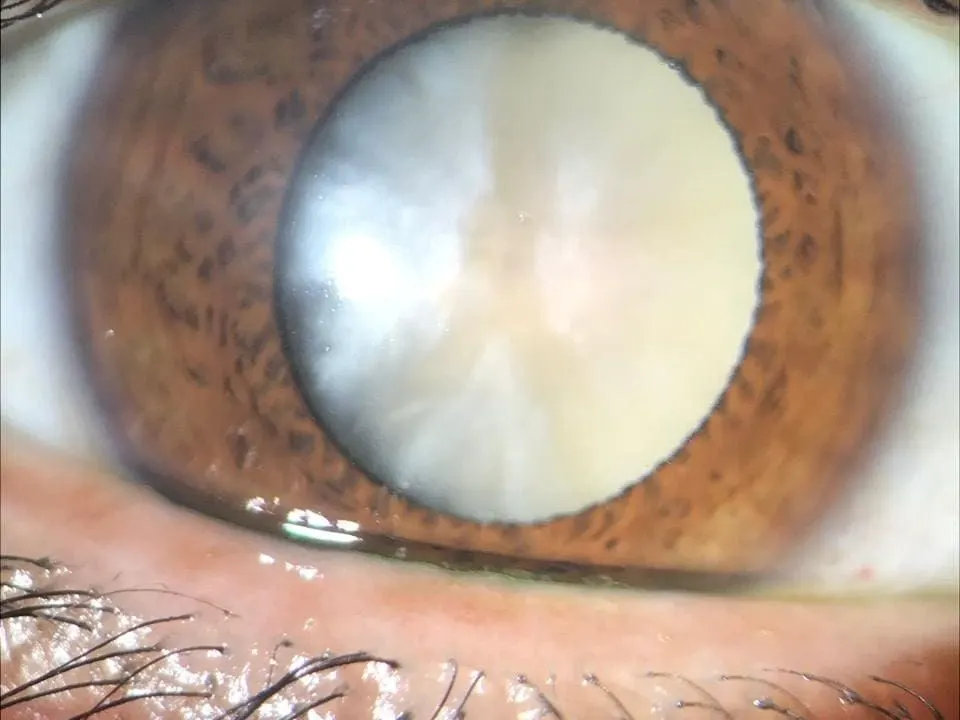
The idea of “waiting for the cataract to ripen” has cost more functional vision than any surgeon will ever get back. It is a clinical myth passed down from one generation of patients to the next, and no serious ophthalmologist has followed it in at least fifteen years. If you live near León and someone told you to wait, it is worth knowing what changed.
Dr. Emmanuel Bolaños Betancourt: ophthalmic surgeon with advanced fellowship training in Cornea, Refractive Surgery, and Cataract Microsurgery. I see patients at Hospital Aranda de la Parra Puerto Interior (20 minutes from León) and at Oftalmo-Visión Clínica Oftalmológica in downtown Silao. Board certified by the Consejo Mexicano de Oftalmología since 2013. Over 15 years of clinical practice, 292 combined Google reviews with a 4.9 average.
Why “wait until it ripens” no longer holds up
The advice has real origins. Decades ago, when cataract surgery meant a large incision, stitches, and weeks of recovery, the practical rule was to operate only once the vision loss justified the risk of the procedure. That made sense then. It does not make sense now.
Today the surgery is phacoemulsification through a microincision: a 2 to 3 mm opening, no stitches, anesthetic drops, 20 to 30 minutes per eye, and visual improvement from the first day. The criteria for surgery changed to match it. You operate when the cataract starts affecting daily life, not when you are nearly blind.
There is more to it: waiting makes things worse. An advanced cataract is harder, needs more energy to remove during surgery, and carries a higher risk of complications than one caught early. The idea of “saving” yourself the surgery by waiting years usually just buys you a harder surgery later.
If waiting for ripeness no longer applies, the next question is when the timing is actually right. And the answer is not in the eye. It is in how your vision affects your day.
The right time: the functional criteria
The current standard is not about “ripeness,” it is functional. If three or more of the following describe you, it is worth coming in for an evaluation:
- Driving at night has become risky because of glare
- You see halos around lights
- Glasses no longer improve your vision no matter how the prescription is adjusted
- Reading needs more and more light
- Colors look duller, as if washed out
- Your prescription changes every few months
- Daily activities like cooking, driving, reading labels, or watching television have become difficult
The evaluation settles this with numbers, not just impressions, telling you whether surgery makes sense now, in six months, or whether waiting is reasonable. The decision is yours, but backed by data.
Once the timing is clear, the next question is what actually happens during surgery. Today’s procedure looks nothing like what your grandparents remember.
What cataract surgery looks like today
- Anesthetic drops. No needles, no general anesthesia in most cases.
- A 2 to 3 mm microincision in the cornea. No stitches needed.
- The clouded lens (the cataract) is broken up with ultrasound and removed by suction, in fragments.
- The new intraocular lens, folded, is implanted and unfolds inside the eye, in the capsular bag.
- The incision closes on its own. A patch or dark glasses for a few hours.
Real duration: 20 to 30 minutes per eye. Most patients see better by the next day. Functional recovery takes a few days, full stabilization a few weeks.
You have seen why not to wait, when to operate, and how the surgery works today. Here comes the decision that gets underestimated the most. The intraocular lens you choose is going to live inside your eye for the rest of your life, and changing it later is complicated.
Types of intraocular lens: the decision that matters most
The natural lens comes out, but something has to take its place to focus light. That “something” is an intraocular lens (IOL). Not every patient needs the same one. The decision is based on your cornea, your lifestyle, and your expectations.
- Monofocal: corrects distance vision. You will need reading glasses. It is the most affordable and most predictable option.
- Toric: corrects astigmatism in addition to distance vision. For patients with significant pre-existing astigmatism.
- Multifocal / trifocal: corrects distance, intermediate, and near vision. Reduces or removes dependence on glasses. Can cause halos and glare while driving at night for some patients.
- EDOF (Extended Depth of Focus): an extended range of vision without the nighttime visual effects of a pure multifocal. Usually the preferred balance for active patients.
One important note: the most expensive lens is not automatically the best one for you. Patients who spend many hours driving at night can do better with an EDOF than a trifocal. Patients with an irregular cornea or glaucoma are usually not good candidates for premium lenses at all. The conversation is personal and honest.
That lens decision is not made by guessing. It is made with five tests that need to happen before a surgery date is set.
The tests that decide everything before you enter the operating room
Before surgery, I run these tests in a single day, in the same office:
- Ocular biometry: measures your eye precisely to calculate the exact power of the intraocular lens
- Corneal topography: checks that the corneal surface is regular
- Corneal tomography: evaluates the internal structure
- Macular OCT: rules out retinal disease that would change the visual outlook
- Fundus exam with pupil dilation
I do not send you to another center for testing. I have all of it in the same office at Hospital Aranda Puerto Interior.
About cost: what you should actually ask
The total price of cataract surgery is made up of four separate elements:
- The surgeon’s fee
- The cost of the intraocular lens (varies a lot between monofocal, toric, and multifocal/EDOF)
- Operating room and materials cost
- Preoperative testing
Any “all-inclusive” quote given before you know which lens you are getting is a black box. Always ask for the cost broken down by component. At your evaluation, I give you the detailed budget before you commit to anything.
What recovery actually looks like, not the brochure version
- Day 0: blurry vision, light sensitivity, a patch for a few hours
- Day 1: functional vision, follow-up visit, back to most daily activities except strenuous exercise and heavy bending
- Week 1: follow-up, drop schedule adjusted, almost all normal activities resume
- Month 1: final check on the first eye, vision stabilized
If you need both eyes done, they are scheduled separately, 1 to 2 weeks apart. This lets me confirm the first eye is healing well and fine-tune the lens calculation for the second if needed.
If you are coming from León: what you need to know about the trip
My surgical office is at Hospital Aranda de la Parra Puerto Interior. From downtown León, it is about 25 minutes on the road to Bajío International Airport. The hospital has ample parking and direct access to the office.
A typical surgery plan is: one evaluation with testing, one surgery for the first eye, 2 to 3 follow-up visits, and surgery on the second eye if needed. We coordinate the dates to keep your logistics from León simple.
Last updated: · Reviewed by Dr. Emmanuel Bolaños, ophthalmic surgeon (Mexican Board of Ophthalmology, member 3045).
What my patients say
292 Google reviews across my two offices, averaging 4.9. Here are a few, translated from Spanish.
With cataract surgery on both eyes, the surgeries, the treatment and the recovery have all been excellent. The service and care at the clinic have also been very professional, personal and trustworthy.
Excellent service, a very quick surgery. I had cataract surgery, I am still recovering but making excellent progress. The care is very good.
The doctor is a very professional specialist, attentive and committed to his patients. He is always ready to answer any question and supports you throughout the whole process, from surgery to recovery.
See reviews for Hospital Aranda de la Parra · Puerto Interior (5.0 · 113) → · See reviews for Oftalmo-Visión Clínica Oftalmológica (4.8 · 179) →
Want me to look at your case?
Send me a WhatsApp with the reason for your visit. I will tell you whether an evaluation makes sense and which of my two offices to come to, before you make the trip. The whole visit can be in English.